Showing posts with label Yemen. Show all posts

Monday, March 19, 2012

Islam in Yemen

By Emma Biedrzycki

About 99% of the citizens in Yemen are Muslims, who belong to the Zaydi order of (Shi'a Islam) or Shafi'i order of (Sunni Islam). The religion was first introduced by Ali Ibn Abu Talib - the cousin and son in law of the Islamic prophet Muhammad. Talib was the first male convert to Islam and during his rule the two great mosques of Janad and San'a were built. Typically Sunnis are mostly in South Yemen and Shia's are in North Yemen, however the number of people practicing each is equal. There is also a small population of Christians, Jews, and Hindus. The Islam religion and legislation is based upon Sharia law which derived from the Quran and the Islamic prophet Muhammad in the Sunnah. Sharia literally means "path" and this system guides many factors in Muslim Life including daily routines, familial/religious dealings and financial dealings. Also the Islamic scholars developed a variety of schools for Islamic thought. These schools are located throughout the middle east and southeast asia where the distinction in education lies within the different legal systems of each nation.  

Problems with the Sharia Law are found within the interpretations which reinforce unequal treatment to women in inheritance, dress, and independence. Along with the justification to initiate cruel punishments to civilians. Within the law there are categories of offenses, the top five Hudud crimes are: unlawful sexual intercourse, false accusation of unlawful sexual intercourse, drinking, theft, and highway robbery. If someone is accused of these crimes the offenses include: stoning, flogging, amputation, exile or execution. Though these punishments are sometimes not practiced as much vigilante justice still takes place after a Hudud crime such as honor killings. Honor killings are murders committed for bringing dishonor on the family, these killings are a worldwide problem. There remains to be much controversy over Sharia law especially with practices involving female mutilation, adolescent marriages, polygamy, and gender-biased inheritance rules. Overall Yemen's religious divide is a source of conflict for the nation because it limits unity and gender reconciliation.  

Friday, March 16, 2012

Yemen: Al-Houthi, S. Secessionists, & Al-Qaeda

By Emma Biedrzycki

South Yemen Flag
Yemen was once divided into the Northern and Southern parts, and conflict was rampant. Although currently the country is "unified" today much of the same problems and threats remain. There are three significant challenges threatening the stability of the Yemen central government. The al Houthi rebels of the north, the southern secessionists and the al Qaeda presence throughout the entire country.

The Houthis are an Islamic insurgent group operating primarily in northern Yemen, they have a total of 100,000-120,000 followers of both armed fighters and unarmed loyalists. The group title Ash-Shabab al-Muminin translates to Believing Youth. The primary leaders of this powerful clan were Hussein Badreddin al-Houthi (former commander) along with several others Ali al-Qatwani, Abu Haider, Abbas Aidah and Yousuf al-Madani. Unfortunately all were killed by Yemeni authority. The Houthis have declared there action for the defense of their community from governmental discrimination, in turn the Yemeni government has accused them of demolishing the institute of Shia religious law.

The southern secessionists are a group of various anti-government fractions who basically go by the title of Democratic republic of Yemen, although the international community has never officially recognized them. Their demands toward the government are similar to the northern al Houthi rebels in which they blame government for the marginalization of southern territories. The southerners have faced exclusion of political and economical benefits. Not only does the central government drain their oil revenues but they refuse to allow vocalization about the issues and grievances of the south. The southern secession wants to withdraw from the union in order to reestablish themselves.

The al-Qaeda is a global based militant Islamist terrorist organization originally founded by Osama bin Laden. The army is both multinational and stateless, their movement calls for Jihad- a way to protect Muslim faith from evil using force. Al-Qaeda has been known to attack civilian and military targets such as the September 11 attacks and the1998 US embassy bombings. They use suicide attacks and bombings to instill and motivate fear. They ignore man-made laws and believe killing of civilians is religiously sanctioned. Their long term goal is the creation of a new Islamic world with a form of sharia law.

All of these forces are a danger toward Middle eastern nations as well as U.S. security. Civil war is a very possible outcome and with the continued anti-government demonstrations there is fear of national collapse. This could then very well lead to terrorist control. The fix would be to keep forces united and reestablish political and economic power in areas of southern Yemen.

Monday, February 6, 2012

Update on Yemen

By Emma Biedrzycki

Populist protests in Yemen have been occurring for the last few years due the unapproved presidency of Ali Abdullah Saleh. The protesters question whether president Ali Abdullah Saleh will remain in office or resign early. Saleh has been the president for 33 years and has previously ruled the Yemen Arab Republic (North Yemen) before the country was unified. He currently rules the entire country and many wish for his presidency to end. Primary reasons why Yemeni citizens do not approve of Ali Abdullah Saleh's rule is due to the lack of democratic reform, widespread governmental corruption and human rights abuse. In the past year many non violent demonstrators have been killed and attacked by military and governmental forces. Much of the conflict began in February 2011when a major national uprising occurred calling for an end to Ali Abdullah Saleh presidency. The response revolved around Saleh announcing he would not seek re-election in 2013 but continue to serve out the rest of his term. This further lead eleven members of Saleh's party to resign and many protesters to continue rebellion.

I am personally not surprised upon discovering this recent information on President Saleh and the Yemeni protests. Yemen is not the only country experiencing massive struggle against poor leadership and corrupt government. Many Arab countries are experiencing similar protests and rebellion however Yemen is interpreted as the worst. BBC World news stated Yemen's history of extreme impoverishment just adds to the increasing turmoil with both the al-Queda involvement and separatist challenges to governmental authority.

In most recent news January 2012, President Saleh was visiting the United States for medical treatment due to current assassination attempts. The protests and fight for democratic leadership continues.

Sunday, November 13, 2011

Conflict History: Yemen Uprising

By Eleanor Gaston

For centuries Yemen has been experiencing political and economical turmoil, but the current conflict in Yemen began in January 2011 when citizens could no longer stand the present government (BBC News). They began calling for democracy through peaceful protest just as many other Middle Eastern countries have. People from all walks of life have come together in many non-violent protests to make it clear that their president’s time has come to step down from power. President Saleh has maintained his position for almost 33 years now, and the Yemeni people want a change that will hopefully turn their future into a democratic one. An interview with the president makes it seem that he is prepared to step down and make their dream a reality as long as an appropriate leader can be elected to take his place, but once the transcription is critically analyzed it is fairly obvious that his diplomatic words are merely a stalling technique as he lets the battles rage on against his own people.

Since the beginning of the current conflict in Yemen, there has been much violence. Although, contrary to what one might immediately assume, the people decided to rise up against Saleh in a peaceful manner. Many times violence is the protester’s way of getting a government to step down, but in the case of Yemen, the violence is coming almost exclusively from the regime in power. Whether or not Saleh has personally commanded that such heinous attacks on the discontent citizens of Yemen happen, his supporters have committed crimes that are a violation of human rights including spraying bullets into a peaceful crowd, sniping individual citizens, and releasing tear gas to disperse the protesters. It has even been reported that electricity, fuel and water have been cut off as an intimidation tactic (Cummings-Bruce). An article from the Amnesty International website reports that supporters of Saleh attacked women who were celebrating in the streets of Ta’izz about the recent Nobel Peace Prize awarded to a Yemeni woman for her work on improving human rights in Yemen. It could be argued that the government is committing acts of terrorism against citizens to scare them into giving up their fight for democracy and a higher quality of life.

The al-Ahmar family, a long term rival of Saleh, has been backing the protesters in their quest to remove Saleh from power. However grateful the protesters are for the financial help of this very wealthy family, most are suspicious of their motives because it is feared that if they were to gain power, there would hardly be any change from the sort of dictatorial government that Saleh offers the people of Yemen now (Worth). This family is suspected of bombing a mosque that injured the president back in June of 2011. This attack wounded several high up officials aside from causing the president, what is speculated to be, considerable bodily harm (“Yemen’s President Saleh”). He had to go to Saudi Arabia for medical treatment, and many people hoped he would not return (“Yemeni President”). Had this occurred, it would have allowed for a new leader to be elected and a democratic government could have been formed. Unfortunately for the protestors and Yemen as a whole, this was not the case, and he came back ready to govern once again (“Yemen—Protests”).

Another key player in the Yemenis’ fight for a more in their politics is General Ali Mohsen al-Ahmar. He is no relation to the al-Ahmar family that participates in violence against the Saleh’s regime, and the powerful general insists only upon protecting the protesters and not on being violent (Worth). He decided to break away from supporting Saleh (his half brother), and as a result, has caused a split in the Yemeni military because Saleh’s son maintains control of one part, while the majority have decided to follow al-Ahmar’s lead and support the protesters (“Conflict Risk Alert: Yemen”).

This split in government troops is dangerous because it could end up causing a civil war. However, the fact that at several points Saleh has claimed that he will step down from power and has not, is just as likely to raise tensions to a boiling point, making the now-peaceful protesters feel a desperation that they may try to remedy by resorting to violence. Yemen is one of the most armed countries in the world, and up until now the protesters have refrained from violent acts in an effort to get the international community on their side in the fight for political freedom. Excessive amounts of force have been used against them though by Saleh’s supporters in an effort to quiet their demands for democracy.

It is hard to comprehend the amount of violence that is going on against people who remain peaceful but steadfast in their quest for a new, stable government. To mention particular instances in which the violence has been particularly ugly is a near impossible task, when so many innocent human lives are being taken, and thousands of people wounded. I have found that reports of civilian deaths and injuries are reported in publications from the US, however, I felt that much was missing. A crisis is occurring in Yemen, and I wanted to hear from some Yemeni people about what is going on.

Much was being left unsaid about the extent of the violence occurring, and so I began to explore videos uploaded by Yemeni citizens themselves. The silence about the horrible acts of the government against the Yemeni people could be due to the fact that the US is an ally of Saleh. Though our government, as well as Saudi Arabia’s government, is working towards getting Saleh to step down quietly, it remains apparent that our priority is maintaining good relations even in the face of an enormous humanitarian crisis. This webpage contains various videos and information about the crimes being committed against the Yemeni protestors. To find out how to help the Yemeni people see a democracy, this video was particularly helpful to me. 
[Bibliography after the fold.]

Tuesday, September 27, 2011

Civil Strife and al Qaeda in Yemen

Lauren Zigan

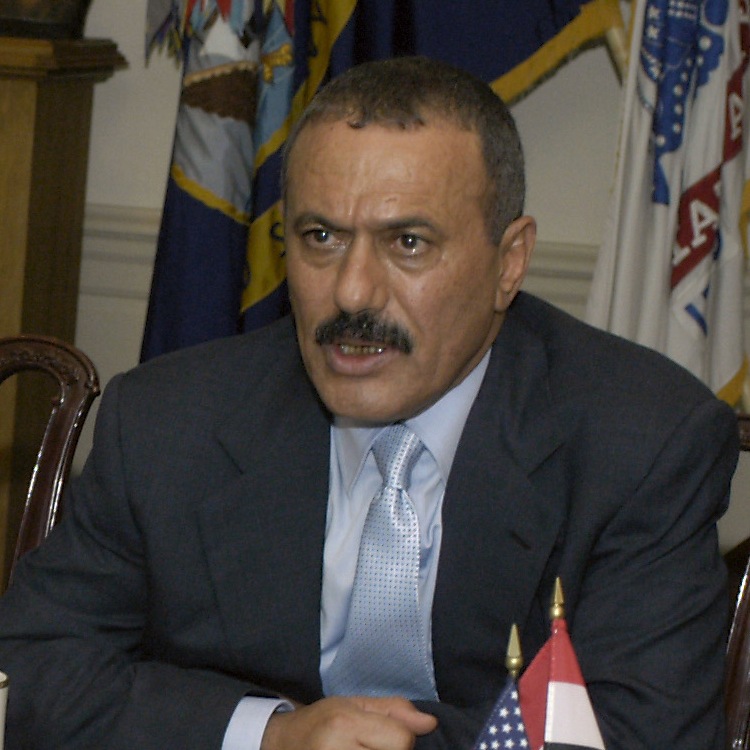
Prime Minister Salah
Yemen has been in conflict for some time while trying to overthrow their Prime Minister Salah. There have been attacks and killings throughout the country, and some major ones in just the past month. One major attack happened on Tuesday August 23rd in the middle of the day.  8 military troops were killed and many more injured when al Qaeda attacked the base at an unsuspecting time catching the troops off guard.  Al Qaeda had been trying to take over the base for a couple weeks prior to the deaths. After the al Qaeda attack on the military base, some al Qaeda lives were taken in a separate attack from the government. The government had been attempting to take back the Abyan province since the military had taken it over. There was an airstrike attack against al Qaeda on Wednesday August 24th that killed 36 suspected militants in Yemen.  There were two airstrikes, one killing about 30 militants and the second about 6. There is fear that the al Qaeda will plot attacks against the government after they had already taken over many towns during the turmoil that was brought out by protests against Salah.

In an attempt to take back territory from the al Qaeda, 26 militants lost their life and 10 more were injured in heated battle in the south of Yemen on August 29th, 2011. The fighting lasted about 24 hours and one of the biggest deaths was the colonel.  With the prime minister refusing to step down from power the fighting, protests and deaths will just continue and the country is left confused. The U.S. is getting more concerned as time goes on and the al Qaeda seem to get stronger in southern Yemen. They are taking advantage of the country’s problems and turmoil and taking over many towns in the south of Yemen. In the past week, not anything major has happened in Yemen. The, what have become normal, airstrikes have continued to occur along with fighting usually in the Yemen south. 12 al Qaeda was killed in a gunfire attack and unfortunately 2 civilians got caught up in the fighting and lost their lives as. Also, 7 more civilians were killed in an airstrike against the militants, as the government continues to try to take back the towns the al Qaeda has taken over.