Showing posts with label ISIS. Show all posts

Wednesday, June 25, 2014

Implications of the Iraqi Crisis

By Jordan Morris

Flag of the Islamic State of Iraq and Syria
Within the last few weeks we have watched a paradigm shift in Middle Eastern foreign relations. With The Islamic State of Iraq and al-Sham on Baghdad’s doorstep, the US is confronted yet again with the prospect of becoming involved in one of the most turbulent states of the Middle East. ISIS’s conquest in Northern Iraq and Syria has already led to President Obama doing something no one thought he would ever do: send American troops back to Iraq. The limited deployment brought some 300 military advisors to assist the Iraqi army in fighting the lingering ISIS militants who have stopped just short of Baghdad, but have explicitly stated their intent to take Iraq’s capital city. ISIS fighters, led by Abu Bakr al-Baghdadi, will find that Baghdad is not Mosul or Tikrit, and at that the Iraqi government’s last stand will not be taken alone. 

Iraq has pleaded for help from the US and received a limited response, one that is unlikely to be followed up with any significant US presence or even the air-strikes that Prime Minister Nouri al-Maliki had petitioned for. Even without major assistance from the US, Maliki’s government may still stand, thanks to Iran. On June 18th Iran’s president, Hassan Rouhani, gave a speech at the Iraq-Iran border, pledging to do whatever it took to protect Shia populations and holy sites in southern Iraq (a move reminiscent of Vladimir Putin, who invaded Crimea citing his government’s duty to protect Russian nationals in Ukraine). At the eleventh hour, when an ISIS attack on Baghdad is imminent , we may very well see an anomaly of world politics take place—cooperation between the US and Iran. Both Iran and the US have been clear that there will be no conventional military coalition between the countries, but undoubtedly both recognize a common interest in protecting the current state of Iraq. Consequently, Iranian Supreme Leader Ayatollah Ali Khamenei has condemned cooperation, and suggested that the US is using this issue to further sink its teeth into Middle-Eastern affairs. 

The ‘enemy of my enemy is my friend’ scenario is an optimistic look at the future of relations between the US and its historical adversary, but some, and specifically Israel, are wary of cooperation with the Islamic Republic. Understandably the small Jewish state is highly skeptical of and opposed to its biggest ally cooperating with a government that has time and time again threatened to destroy it, but Iranian action supported by the U.S. could actually benefit Jerusalem. ISIS has been clear its vision of al-Sham includes the lands of Palestine. The militants announced the development of a special unit, the Al Quds Unit, whose mission is to destroy the “Zionist regime occupying Palestine,” according to an article on CounterPunch.org

Tuesday, June 17, 2014

ISIS in Iraq

By Jordan Morris

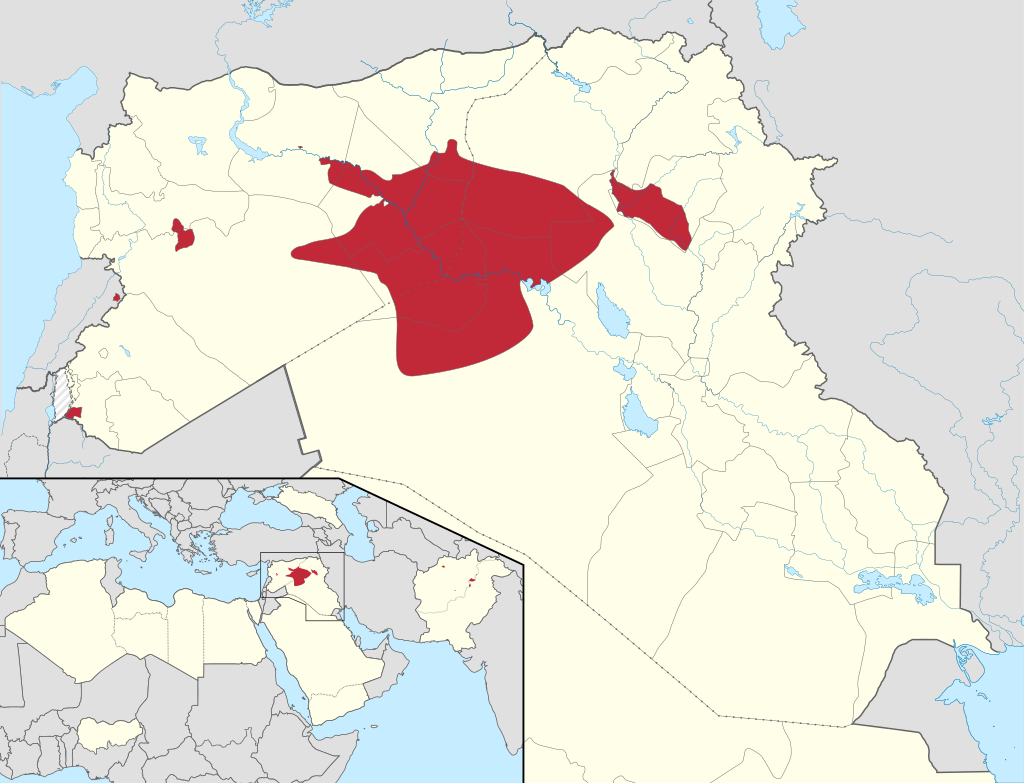
ISIS-controlled territory as of June 2014
Between June 6th and June 9th, Iraq’s second largest city was taken by the Islamic State of Iraq and the Levant, also known as the Islamic State of Iraq and al-Sham (ISIS). The adolescent Islamic group splintered from al-Qaeda in April of 2013 and has carried out attacks throughout Northern Iraq and Syria since. 

ISIS has been successful on both their Syrian and Iraqi fronts. During their siege of Mosul, ISIS defeated the US-trained and 15-times-as-large forces of the Iraqi government. Images from the battle show signs of desertion by both the Iraqi army and local police. ISIS emir, Abu Bakr al-Baghdadi, has been able to hold the largely Sunni regions north and west of Baghdad as well as establishing interim governments lead by ISIS officers. The rebel group’s forces have been numbered at under 1,000, but their swift and brutal tactics, along with support from Sunni tribal communities, have allowed them to maintain course. Currently ISIS controls Fallujah and Tikrit, as well as large swaths of northwestern Iraq and eastern Syria. Their goal is to form a caliphate stretching from the Lebanese Mediterranean to the Zagros Mountains of Iran

While the Islamic State of Iraq and al-Sham continue making political and economic gains in pursuit of their explicit goal, taking Baghdad, Kurdish forces in the north have seized their opportunity to gain control of “Kurdish Jerusalem”, the oil-rich city of Kirkuk. Kirkuk, which lies just outside of the Kurdish autonomous region, was a landmark victory for Kurdish Iraqi’s who seek to forward their own goals of a united and independent Kurdistan. The Kurds were able to regain their historic capital in the midst of turmoil and government desertion brought upon by ISIS operations in the area. Unprecedented gains by the Kurds and the inability of the Iraqi government to assert any sort of authority near Kurdish populated regions make the image of Kurdistan all the more vivid. 

Iraqi Kurdish troops, known as the Peshmerga, maintain representation within Iraqi parliament. Shoresh Haji, who represents the Kurds within the Iraqi government, praises the Peshmerga’s reclamation of Kirkuk, but maintains that the Kurds must work with the Iraqi government to fend off ISIS, and use their support as leverage for Kurdish interests in the Iraqi Parliament. According to Haji, the unrest in the north presents, “…an opportunity we cannot ignore”. 

Both the Peshmerga and ISIS seem to be benefitting from the Iraqi government’s inability to maintain stability, but for hundreds of thousands of refugees and Internally Displaced Persons (IDPs), the future remains bleak. The Syrian crisis has created an estimated 2.8 million refugees. Of that number, 200,000 found shelter in Iraq. On top of these 200,000, almost 500,000 fled Mosul after fighting broke out. The dysfunction of the Iraqi government offers little to be optimist about for those displaced by the recent surges of violence in their temporary homes. 

The splintering of Iraq, marked by the military and political ambition of ISIS and the Peshmerga alike are a testament to the futility of long-term solutions for stability. It is not only governments in the Middle-East that seem prone to this ideological splintering. ISIS themselves were shed from formal al-Qaeda ranks. This disintegration can be seen taking place within the Taliban as well. On Sunday night the TTP or Tehrik-i-Taliban Pakistan, carried out attacks at Jinnah International Airport in Karachi, leaving at least 34 dead. On Tuesday, the group was involved in more attacks at Jinnah Int’l, this time targeting the Airport Security Forces Academy. The TTP maintains ideological differences with the Afghan Taliban, and have themselves experienced mutiny within their ranks with the Meshud faction deciding that they no longer wished to be affiliated with those who employ tactics such as ransom, extortion, and mass killing

Iraq is now a splintered state, with each splinter seeking its own path. Should they realize their goals, it would mean the end of contemporary borders In the Middle-East. Factionalization, while it has crippled the very governments militants like the TTP or ISIS fight against, is a virus that infects indiscriminately and carries the same side effects. The mission of Islamic rebel groups and their interpretation of the Koran is subject to their leadership. Should the interpretations contradict each other, it can mean conflict and even war. Similarly should the ideologies of factions within militant groups fail to be cohesive, it could mean the end of an otherwise successful campaign.