Showing posts with label Jordan Morris. Show all posts

Wednesday, August 6, 2014

Persecution of a People: Myanmar's Campaign to Expel the Rohingya

By Jordan Morris

Rakhine 2012
In 2011, Myanmar held its first round of decades after fifty years of military rule. Thein Sein, a former military official, took the election claiming 90% of the popular vote. Needless to say, the election was shrouded in controversy. 

Despite the controversy, Sein has since been regarded as an innovator and reformer, easing restrictions on freedoms of media, travel, assembly, and speech. As the international community applauded and encouraged the reformation of the government in Myanmar, life for the Rohingya’s in Myanmar’s western Rakhine state found their livelihoods becoming more constricted as the rest of Myanmar began to enjoy marginal freedoms. 

The Rohingya are a part of a 4% Muslim minority in majority Buddhist Myanmar. 80% of Myanmar’s million or so Rohingyas live in northern Rakhine, near the state capital of Sittwe and the surrounding villages. The Rohingyas share the western state with the Rakhine Buddhists who have strong lineage in the region and share the official government stance that the Rohingya are illegal immigrants from Bangladesh, with whom the state shares a border. The government refers to the Rohingya ‘Bengalis’ and even calling them Rohingya in Myanmar is taboo. The Rohingyas status as illegal immigrants was popularized after Ne Win’s military junta enacted the 1982 Citizenship Law which outlined 135 recognized ethnic groups that are native to Myanmar pre-1823. This list did not include the Rohingya. The 1823 cut-off was a result of the British colonial government in India encouraging migration from what is now Bangladesh into Myanmar. Even though Rohingya did migrate from Bangladesh at that time, reports from the British East India Company place Rohingya in Arakan (now Rakhine) at least 25 years before 1823. The denial of citizenship to the Rohingya in 1982 was part of a deliberate effort by Ne Win to cleanse the country of religious minorities, Muslims being the main target. 

Since the rise of the military government the Rohingya have systematically been stripped of rights. At the end of a ten day fact-finding mission carried out last month, Yanghee Lee, Myanmar’s UN Envoy, described the situation as ‘deplorable’ and while she congratulated the country in the steps it has made since military rule, she feared “…signs of possible backtracking, which if unchecked could undermine Myanmar's efforts to become a responsible member of the international community that respects and protects human rights”. 

Thursday, July 31, 2014

What We Were Afraid Of in Libya

By Jordan Morris

Gen. Khalifa Haftar
Three years after the fall of Col. Moammar Qaddafi, Libyans find themselves caught in the crossfire between the divided revolutionary militias. Airstrikes employed by NATO to overthrow the dictator of 42 years were seen as both a tactical victory for NATO and one of progress for humanitarian and democratic intervention. In 2014, pats on the back and rounds of applause of 2011 have fallen silent. Today Libya’s two largest cities have descended into exchanges of rocket-fire, airstrikes, and urban ground-force confrontation. The roots of current violence can traced back to the return of Khalifa Haftar, former Qaddafi Chief of Staff of the Armed Forces and current ‘General’ of the Libyan National Army. Haftar had been living in the U.S. since being disowned by Qaddafi after failed military operations in Chad in the late 1980's. When the revolution began in 2011, Haftar returned to Libya to head the offensive against Qaddafi. In February, Haftar called for suspension of the government. On May 14th, the General launched Operation Libyan Dignity, with the objective of removing Islamist extremism from Libya and their newly formed parliament, the Democratic National Conference. Because of the lack of a strong national army, the government will frequently call on local militias for security and police presence, many of who exhibit extremist tendencies.

The fighting can be loosely described as having two sides, but both sides are largely made up of militias and rebel groups with their own chains of command and ideologies.

Gen. Haftar’s Libyan National Army is really a cohort of militia’s he commanded during the overthrow of Qaddafi who share his secular ambition. Recently, Al-Saiqa Forces, an elite Libyan commando unit, aligned itself with Haftar’s army. The addition allowed them access to aircraft, advanced weaponry and trained soldiers. Part of the motivation for Al-Saiqa were their confrontations with al-Qaeda affiliate Ansar al-Sharia. In May, General Haftar launched an attack against the parliament in Tripoli, an attack that the Democratic National Conference called upon Ansar to defend. Fighting between the two continued as recently as July 30th, when Ansar successfully besieged an Air Force base in Benghazi that had been held by Libyan National Army forces, leaving thirty dead. Khalifa Haftar denounces the government because many of the representatives are members of the Muslim Brotherhood affiliate, The Justice and Construction Party. The election of Prime Minister Ahmed Matiq was also shrouded in controversy due to abstention by the parliament’s secular lawmakers. General Haftar has received strong backing by many who wish to avoid the creation of an Islamist state, something that the LNA believes is likely under the current government. On the other hand, current members of the government claim that Haftar is using his military credentials to start a coup, though he claims that his movement is an expression of will of the Libyan people.

Wednesday, July 30, 2014

Xinjiang's Uighurs Under China's 'Strike Hard' Initiative

By Jordan Morris 

rfa.org
Disputes between China’s government and the ethnic minority Uighur population are beginning to boil over again in the countries northwestern province. On May 22nd two vehicles rigged with explosives drove into a market in the capital of the Xinjiang province, Urumqi. The bombs left 31 dead and ninety injured, prompting the government crackdown the very next day. These attacks prompted a government “crackdown” in Xinjiang. The Chinese government blamed the attacks on Uighur extremist and separatists. 

China’s terrorism crackdown is the most recent offensive against the Uighurs, but tensions have been high since the Communist Party took over in 1949. In the early stages of the government, special zones called ‘minzu’ were made for different ethnicities to adjust the government to their cultural identity. The Uighurs quickly found out that these policies only stood to benefit the ethnic majority Han Chinese. Tibetans, Uighurs and other ethnic minorities found themselves struggling against cultural assimilation. Since then, the Xinjiang province has been puncuated with skirmishing between the government and Uighurs who see themselves as an independent people. 

The year-long policy has come under fire due to its strict language regarding social freedoms, something that China is no stranger to taking flak for. In 2009, the Chinese government shut down internet in Xinjiang in the wake of protests and riots that occurred due to the death of 2 Uighur factory workers at the hands of a Han mob. The sites were largely forums where Uighur people could communicate, some of which used the Uighur Arabic alphabet. Despite website creator’s attempts to keep the websites as depoliticized as possible, discussion on the site turned to organizing protests that would lead to riots, killing 200, and the ‘digital book-burning’ of Uighur-run internet sites. Ten months later, the people of Xinjiang were again able to access the internet only to find that 80% of Uighur run websites had been removed. The owners of many of the popular websites were arrested on charges to the tune of “endangering state safety” or “separatism”. Radio Free Asia reports that between the beginning of the crackdown in May and July 8th, almost 400 suspected terrorist, extremists, or separatists have been arrested within the Xinjiang province. It was as clear then as it is now that speech is still a punishable offense.

Tuesday, July 29, 2014

"Quiet will be met with quiet."

By: Jordan Morris

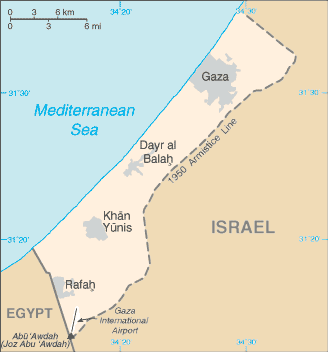
Monday’s fighting produced up to ten more casualties, eight of which reported to be children, according to BBC. Casualties came from both Al-Shifa Hospital and Al-Shati Refugee camp. The latest exchange of fire comes during the beginning of Eid al-Fitr, a Muslim celebration commemorating the end of the holy month of Ramadan. As has been so often the case, during the most recent flare up of Israeli-Hamas fighting civilians have felt the overwhelming majority of the consequences, with an alarming number of victims being children and families. The number of Palestinians killed since the beginning of ‘Operation: Protective Edge’ on July 8th has reached over 1,000. These numbers have lead to the U.N. Secretary General Ban Ki-moon issuing a statement calling for an immediate humanitarian cease-fire between Israel and Hamas. Hamas endorsed the holiday cease-fire, but Israel isn’t ready to put operations to a halt until it achieves its goal of eliminating Hamas from Gaza. Ron Prosor, Israeli ambassador to the U.N. stated that on five separate occasions Israel had agreed to cease-fire negotiations and on all occasions, Hamas had broken the agreements. Prosor summed up Israel’s stance on any further peace talks: ‘…quiet will be met with quiet.” For all intents and purposes, the cease-fire Ban wanted was never achieved.

Gaza’s size and population density have been abused by both the IDF and Hamas and contributes to the high amount of civilian casualties. The strip is home to 1.8 million within 139 sq. miles of territory. There is a blockade separating Gaza from Israel, and Egypt, who view the Palestinians as ‘brothers’ but who’s new government refuse to support Hamas, have closed their border to the region as well. Ban Ki-moon describes the situation in Gaza: “The people of Gaza have nowhere to run. They are trapped and besieged on a speck of land. Every area is a civilian area. Every home, every school, every refuge has become a target. The casualty and damage figures also raise serious concerns about proportionality.” Jeffery Goldberg, writer for The Atlantic, outlined several reasons why he believed that Israel is winning militarily, but losing on a much larger diplomatic scale. One important insight outlined in the article was that Hamas baits Israel into killing civilians, and Israel will usually take the bait. Baiting Israel allows Hamas to destroy Israel’s image and simultaneously cultivate hatred and vengeance. Hamas will antagonize Israel with a rocket strike and Israel will retaliate by destroying tunnels or key infrastructure that Hamas intentionally built around populated neighborhoods. Netanyahu fired at Hamas claiming their tactics used the civilians in Gaza as ‘human shields’.

Wednesday, July 9, 2014

All Eyes on the Caliphate

By Jordan Morris

ISIS leader Abu Bakr al-Baghdadi has recently declared the caliphate and the group known as ISIS has changed its moniker to simply the Islamic State. According to Charlie Cooper who is a researcher at the Quillium Foundation, (a think-tank dedicated to combating religious extremism) in declaring the caliphate, al-Baghdadi has presumed the position, “…leader of Muslims the world over and the successor of the Prophet Muhammad and a divinely appointed leader of Muslims”. Cooper goes on to question the integrity of an extremist jihadist’s ability to claim authority to the entire Muslim world. At the same time al-Maliki’s government have begun their offensive against the new caliphate, targeting Tikrit amongst other IS held territory. A spokesman for the government claims that thousands of Sunni tribal forces have assisted them in fighting off the Islamic State. Amidst the turbulence that is taking place in Iraq, the concussion has spread across the globe.

The conflict in Iraq has further-reaching implications for more than just its immediate neighbors. In India, newly elected Prime Minister Narendra Modi faces his first foreign policy crisis. India, already in an energy crisis Modi is determined to solve, now must focus on the future of Iraq, who provides 25 million tons of crude oil to India yearly. India remains optimistic about their energy imports, citing that 90% of Iraq’s oil supply comes from the pro-government-Shia dominated south, and that they have access to a diversity of other OPEC suppliers. That being said they have continue their oil reserve program to compensate for any crisis that may narrow their supply. Oil notwithstanding, Modi still faces the issue of how to bring home Indian workers that are now trapped in Iraq. The Indian government is confident that this crisis will not affect oil imports or any of the other domestic and economic challenges they face as Modi prepares to present his first budget in July.

Part of this concussion is also the things that we look over. For instance, in Egypt, several Al-Jazeera reports have been given heavy prison sentences after being accused and charged with supporting the Muslim Brotherhood and ‘reporting false news’. One Amnesty International representative ruled the proceedings as a ‘dark day’ for media rights. Not a good start after overthrowing their second president. In Eastern Europe, a peace deal was drawn up between separatists, the Kremlin, and Kiev that sought to a cease fire and negotiations. Violence has decreased for the most part but Ukrainian President Petro Poroshenko notes that separatists must disarm and dislodge from their positions, something that they refuse to do. Amid the cease-fire that exists throughout eastern Ukraine, Slavyansk is still consumed by fighting which resulted in a Ukrainian helicopter being shot down. Going further east we are still reminded that Thailand has just undergone its second military coup in ten years after fierce protests around the country. In Japan, Prime Minister Shinzo Abe has gone on a campaign of constitutional reinterpretation, hoping to open negotiations about the reach of Japan’s constitutional Article 9, which forbids them from having an offensive military. Tokyo insists that it is important to renegotiate the article so they can defend themselves against their aggressive neighbors, China and North Korea. On top of Japan’s constitutional woes, there’s still the fact that Fukushima is a disaster and workers can’t be there to clean up more than a few hours a day because of how toxic it is. There have been reports of contaminated ground water and blow-back from the government’s attempt to conceal the true scope of the meltdown. The grave potential is contaminated water making its way in large amounts into the ocean and spreading beyond control.

Still we turn our attention to al-Sham.